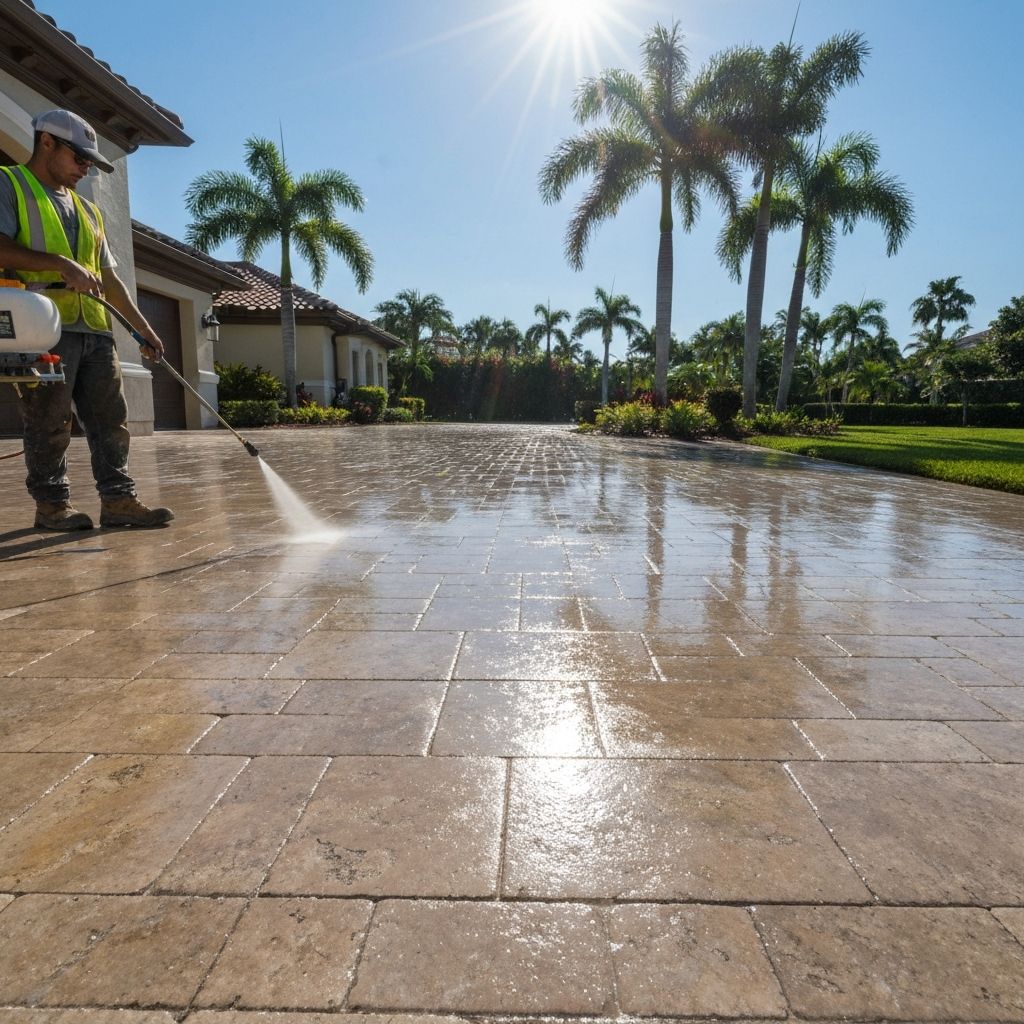
When you pick the right sealer, you give your pavers the best defense against Florida's harsh elements. The best paver sealer for Florida uses UV inhibitors to reduce sun damage and keep colors vibrant. Water repellency stops moisture from seeping in, which helps prevent stains and erosion. Mold and algae resistance keeps surfaces clean and safe — so South Florida residents enjoy attractive, long-lasting pavers year after year.
Key Takeaways
- Apply sealers during dry seasons for the best results, avoiding rainy weather to maximize durability.
- Regularly inspect and reseal your pavers every 2–3 years to ensure long-lasting protection.
- Opt for mold and algae-resistant sealers to maintain clean and safe surfaces in Florida's humid climate.
- Select a water-repellent sealer to prevent moisture intrusion, reducing the risk of stains and erosion.
- Choose a paver sealer with UV inhibitors to protect against sun damage and keep colors vibrant.
"A Boca Raton homeowner who invested in a premium wet-look sealer maintained vibrant paver color despite constant sun exposure and resisted water stains through an entire hurricane season — highlighting why the right sealer is an essential investment for every Florida homeowner."
Florida's Weather Challenges
Florida's unique climate puts pavers under constant stress. With over 50 inches of annual rainfall, humidity levels that regularly exceed 74%, and nearly year-round UV exposure, unsealed pavers can fade, shift, crack, or develop mold within just a few seasons.
☀
Humidity & Heat
Persistent high humidity accelerates efflorescence (white chalky residue), while extreme heat expands paver joints, making them more prone to cracking.
⚡
UV Exposure
South Florida averages 230+ sunny days per year, leading to rapid fading and surface breakdown without UV-resistant sealers.
🌧
Heavy Rainfall
Coastal areas like Miami and Fort Lauderdale average 60+ inches of rain annually, creating ideal conditions for mold, mildew, and algae growth.
"In Florida, sealing isn't optional — it's preventive maintenance. A good sealer protects against fading, resists algae, and locks the sand in place so the entire system lasts years longer."
Common weather-related paver problems in Florida
- Mold and algae growth in humid shaded areas
- Staining from plant debris and storm runoff
- Shifting and settling after heavy rain washes out joint sand
- Fading and discoloration from intense UV exposure
- Weed and moss growth between pavers
| Season | Conditions Affecting Sealing |
|---|---|
| Dry Season (Nov–Apr) | Lower humidity, stable temperatures, minimal rainfall — ideal for sealing |
| Rainy Season (Jun–Oct) | Frequent downpours, high humidity — avoid sealing during this period |
| Spring (Apr–May) | Good window before rainy season, but sudden storms are possible |
UV Protection
Florida's sun shines with relentless intensity. Prolonged UV exposure causes fading and discoloration, especially on pavers that lack UV protection. Expansion and contraction from heat can also cause micro-cracks over time. Laboratory tests show that nano sealers offer up to 100% UV resistance and last up to 10 years under Florida conditions — compared to 1–2 years for standard sealants.
| Sealer Type | UV Resistance | Longevity in Florida |
|---|---|---|
| Nano Sealer | 100% | Up to 10 years |
| Standard Acrylic Sealant | Varies | 1–2 years |
Tip: Apply a UV-resistant sealer every 2–3 years to keep your pavers bright and prevent sun-induced fading.
Water Repellency
Rain and humidity in Florida can cause pavers to shift, stain, and erode. The best paver sealer creates a water-repellent barrier that stops moisture from soaking in. Water-based formulas work especially well in Florida because they allow pavers to breathe while blocking liquid intrusion.
- Sealing locks in joint sand, so pavers stay in place after heavy rain.
- Sealers stop organic debris from penetrating the surface, making cleanup easier.
- Sealing prevents water from seeping into pavers, reducing mold and mildew risk.
High-quality water-based sealants last 3–5 years. Acrylic sealers, which only coat the surface, last 2–3 years. You should reseal every 2–3 years to maintain stability.
Mold & Algae Resistance
Florida's humidity creates the perfect environment for mold and algae, especially in shaded spots. The best paver sealer for Florida uses water-based formulas that manage moisture and block biological growth. Products like Ultra Seal Classic Gloss, SealThane, and Paver Seal RX offer joint stabilization and inhibit weed growth while keeping surfaces dry.
Note: Choose a sealer with low VOCs and environmental safety ratings for healthier outdoor spaces around pools and play areas.
Durability & Product Comparison
Silane and siloxane sealers penetrate the surface rather than coating it, providing deep protection against stains, fading, and biological growth. Most manufacturers recommend resealing every 1–3 years depending on traffic and exposure.
| Product | Key Features |
|---|---|
| Ultra Seal Classic Gloss Wet Look | Vibrant color, long-lasting protection against staining, fading, and weathering |
| SealThane | Deep color enhancement, long-lasting protection against staining and weathering |
| Paver Seal RX | Clear wet look, protects against fading and staining |
| Seal RX Enhance | Penetrating stone sealer, enhances color, long-lasting UV protection |
Water-Based vs. Solvent-Based Sealers
When choosing the best paver sealer for Florida, consider both performance and safety. Water-based sealers have low VOCs, don't emit harmful fumes, and are safer for your family and the environment. Solvent-based sealers produce a more intense "wet look" but contain higher VOCs.
| Property | Water-Based | Solvent-Based |
|---|---|---|
| VOCs | Low | High |
| Color Change | Subtle, natural | Strong wet look |
| Film | Thin, durable | Thick, may peel |
| Adhesion | Deep penetration | Surface only |
| Toxicity | Non-toxic | Toxic fumes |
| Finish Options | Natural / Satin / Low Gloss | High Gloss |
| Durability | 3–5 years | 2–5 years |
| Best For | Chemical protection | Color enhancement |
Tip: Water-based sealers do not require as many safety precautions and are easier to clean up after use — ideal for DIY application in Florida's climate.
Application Tips
Proper paver sealing starts with the right tools and technique. Use a pump sprayer or paint roller for even coverage, always applying in thin layers to avoid streaks and bubbles.
- Let the first coat dry at least 2 hours before applying a second coat.
- Keep foot traffic off for 24 hours and vehicle traffic off for 48 hours.
- Always clean and dry pavers thoroughly before sealing.
- Do not apply during wet or humid weather — wait for a dry forecast window.
- Avoid overapplying, which causes discoloration and flaking.
- Use the correct sealer formula for your specific paver type (travertine, brick, concrete).
Best Time to Seal Pavers in Florida
Timing matters for paver sealing in Florida. The best results come when you seal during the fall or early winter (November through April). These seasons offer cooler temperatures and less rain, giving you ideal dry-weather windows for proper curing. Sealing during dry conditions helps the sealer bond well, prevents water penetration, and reduces the risk of mold growth.
Avoid sealing during rainy weather or summer storms. Moisture trapped under the sealer ruins the finish and significantly shortens its lifespan.
Frequently Asked Questions
How often should you reseal your pavers in Florida?
You should reseal your pavers every 2–3 years. High-traffic areas or spots with heavy sun exposure may need more frequent attention. Regular annual inspection helps you spot early signs of wear before they become costly.
Can you apply paver sealer yourself, or should you hire a professional?
You can apply sealer yourself with basic tools like a pump sprayer or roller. If you want a flawless finish, have large areas, or are working with natural stone like travertine or marble, a professional will save you time and ensure the correct product is used.
What happens if you seal pavers when they are wet?
Sealing wet pavers traps moisture beneath the surface, which causes hazing, bubbling, or peeling. Always let your pavers dry completely — typically 24–48 hours after any rain — before applying any sealer.
Does sealing pavers make them slippery?
Some sealers add a glossy finish that may feel slick when wet. Always check the product label for slip resistance, and request an anti-slip additive if you are sealing pool decks, walkways, or other high-moisture areas.
Ready to Protect Your Pavers?
Craft Pavers is South Florida's certified paver sealing specialist. We serve Palm Beach, Broward, and Miami-Dade counties with professional-grade UV-resistant sealers, same-week availability, and a 100% satisfaction guarantee.
License: 20-PV-21699-X | U-22480