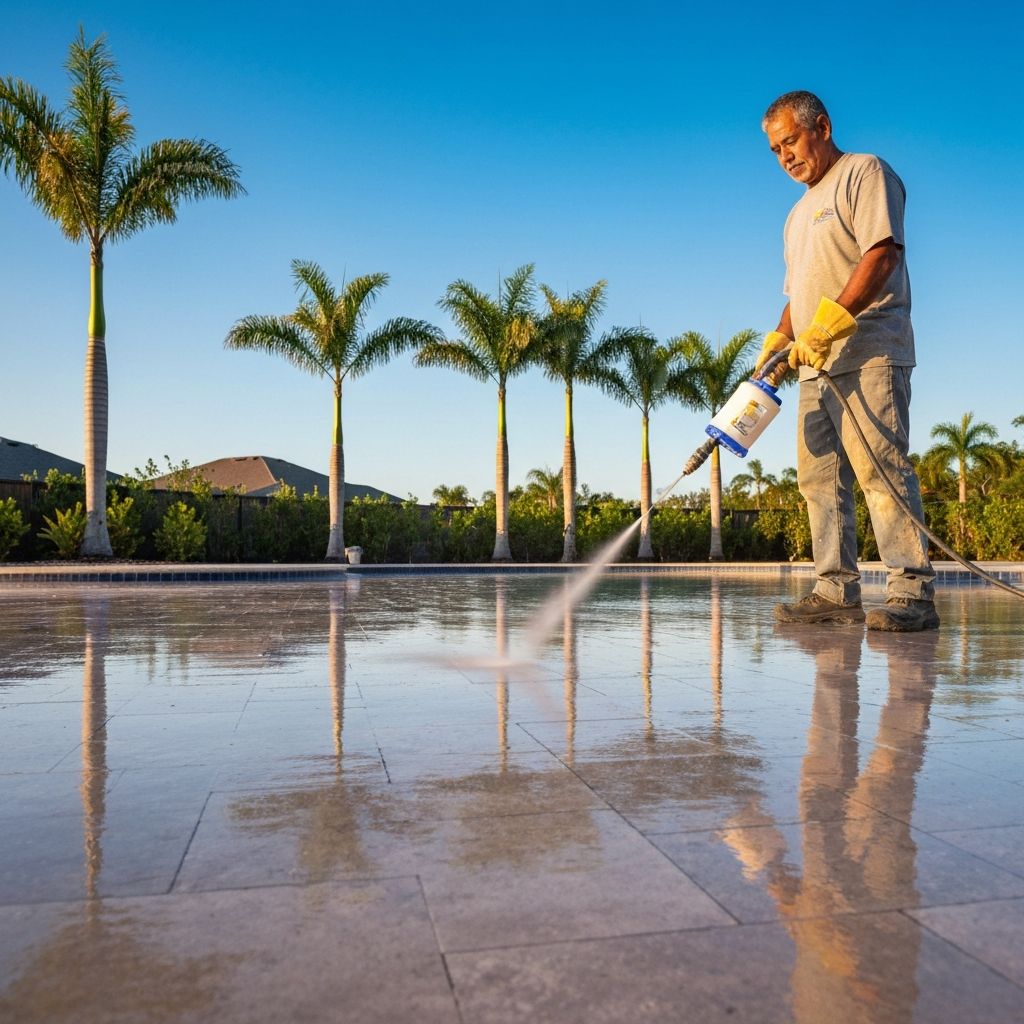
Protect & EnhanceYour Outdoor Investment
Florida's UV Index 11+, 60+ inches of annual rain, and coastal salt air are the three forces eroding your pavers every single day. Our industrial-grade breathable sealers stop all three — preserving color, blocking mold, and eliminating joint erosion.
UV Oxidation Blocked
Industrial UV inhibitors protect paver color from Florida's UV Index 11+ — the leading cause of paver fading
Mold & Algae Denied
Breathable sealer surface eliminates moisture footholds that sustain mold, algae, and mildew colonies
Joint Erosion Stopped
Polymeric sand infusion creates permanent weed-resistant, rain-proof joint integrity — no more washout
3-Year Sealer Warranty
We warrant the sealer against peeling, delamination, and blushing — the only guarantees that matter
What Happens to Unsealed Pavers in Florida
Florida's climate is uniquely hostile to unprotected hardscape. These are not hypothetical risks — they are the predictable, measurable outcomes we reverse on every restoration project.
UV Oxidation & Color Fading
Florida's UV index averages 11+ during summer — among the highest in the continental US. Unsealed pavers lose up to 40% of their original color within 3 years. Sealing blocks UV penetration and locks in pigmentation permanently.
Mold, Algae & Mildew Growth
South Florida's 60–80% ambient humidity creates ideal conditions for mold and algae colonization on porous stone and concrete surfaces. Unsealed pavers develop black and green biological staining within 12–18 months. Breathable sealers deny moisture footholds without trapping ground humidity.
Joint Sand Erosion
Standard kiln-dried joint sand has zero binding strength — Florida's 60+ annual inches of rainfall and routine pressure washing wash it out systematically. Loose joints allow paver shifting, weed root intrusion, and ant colony nesting. Polymeric sand is the permanent solution.
Tannin & Organic Staining
Florida's tropical canopy deposits tannins, berries, and organic acids directly onto unsealed surfaces. These compounds penetrate porous travertine and concrete within hours, causing deep-set brown and rust staining that requires professional extraction — not simple cleaning.
The Florida Caution: Why Breathability Is Non-Negotiable
Florida's ground moisture is always present. Non-breathable sealers — common with solvent-based products — form a vapor-impermeable film over porous stone. Trapped moisture cannot escape, migrates to the surface, and causes efflorescence (white hazing or "blushing") — a permanent, irreversible discoloration without complete sealer stripping. Every product we use carries a breathability rating of 3 or above on the European BS EN 1062-1 scale. This is not optional. It is the standard.
The Craft Pavers 5-Step Restoration Protocol
Every sealing project begins with a full restoration — not a surface coat applied over neglect. This is the technical difference between a 2-year result and a 7-year result.
Bio-Degradable Pre-Treatment
We apply a professional-grade bio-degradable algaecide and fungicide solution across the entire surface. This pre-treatment kills mold, algae, and lichen at the root level — not just the visible surface — preventing re-growth from dormant spores within the paver matrix.
Dwell time: 20–30 minutes. Eco-safe, pet-safe, and phosphate-free.
Oscillating Surface Cleaning
Our industrial oscillating surface cleaners deliver consistent 3,000–4,000 PSI pressure in a controlled circular pattern — eliminating the streaking caused by traditional pressure wand washing. This removes bio-film, embedded dirt, old sealer residue, and efflorescence salts without etching the stone surface.
Equipment: 20" surface cleaner heads. Zero streaking guaranteed.
Specialist Stain Extraction
Oil, rust, tannic acid staining from Florida's tropical trees, and efflorescence deposits require targeted chemical extraction. We apply pH-specific poultice compounds for each stain type, allow full dwell penetration, then extract the dissolved compound from the pore structure.
Stain types treated: rust, oil, tannins, battery acid, paint, and efflorescence.
Polymeric Sand Infusion
All joints are blown clean with compressed air, then packed with premium polymeric sand. The sand is swept in, compacted, excess removed, and activated with a fine water mist. The polymer binders cure over 24 hours into a flexible, interlocked joint matrix that resists rain washout, weed germination, and ant tunneling.
Product standard: ASTM C144 compliant. Joint integrity: 5–7 year lifespan.
Flooding-Coat Sealer Application
We apply the selected sealer using a flooding-coat technique — flooding the surface then back-rolling to achieve uniform penetration depth and eliminate surface pooling. Two coats are applied where required. Our breathable, water-based industrial sealers cure to the selected finish within 4–6 hours.
Application: flooding coat + back-roll. Cure time: 4–6 hours (walk-on), 24–48 hours (vehicle).
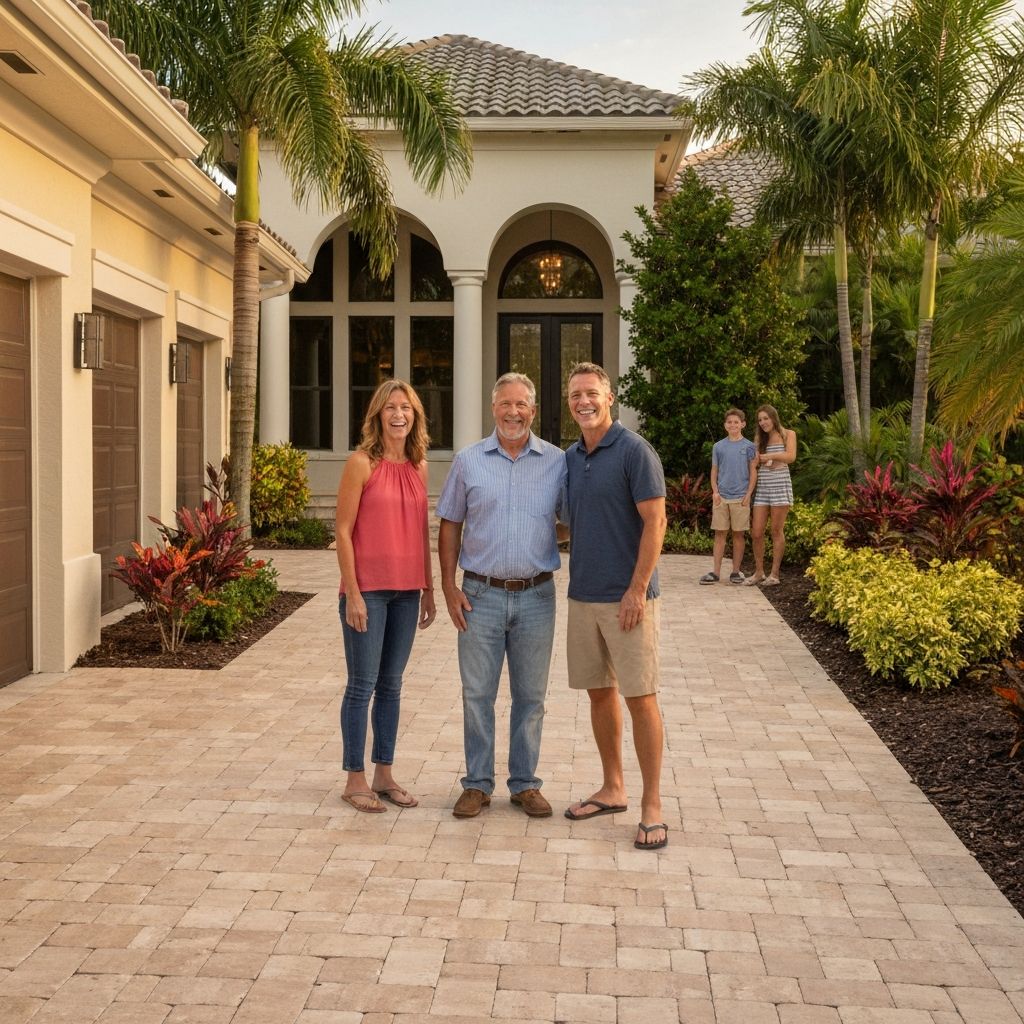
The Result That Matters Most
A protected, restored surface your family enjoys every day — and neighbors notice from the street. 360+ South Florida families can't be wrong.
5.0 Google Rating · 360+ Verified Reviews
Choosing the Right Sealer Finishfor Your Florida Property
The finish you select determines both the aesthetic result and the breathability performance of your sealer. Photos below are representative — your consultant will provide on-site samples on your specific paver material.
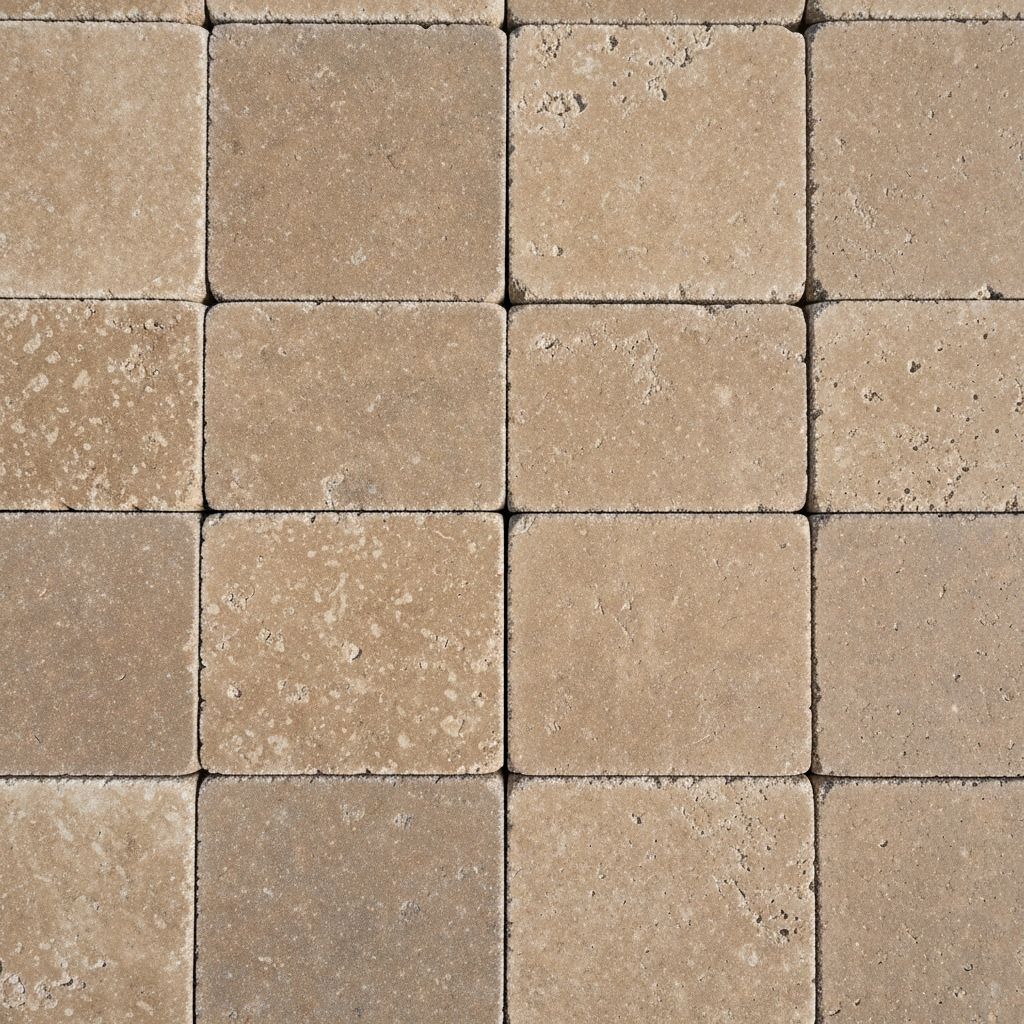
Natural / Matte Finish
Invisible Protection
Shine
Heat
Slip Risk
The matte finish provides full UV and moisture protection while maintaining the paver's original, unsealed appearance. No sheen, no color enhancement — purely functional protection that is visually indistinguishable from an untreated surface.
- Preserves the natural, authentic stone appearance
- Maximum breathability — optimal for high-humidity Florida environments
- Lowest slip risk of all finish types — safe for pool decks without additive
- Ideal for travertine and shellstone where natural aesthetics are the design intent
Best for: Pool decks, natural stone patios, areas where authenticity is priority.
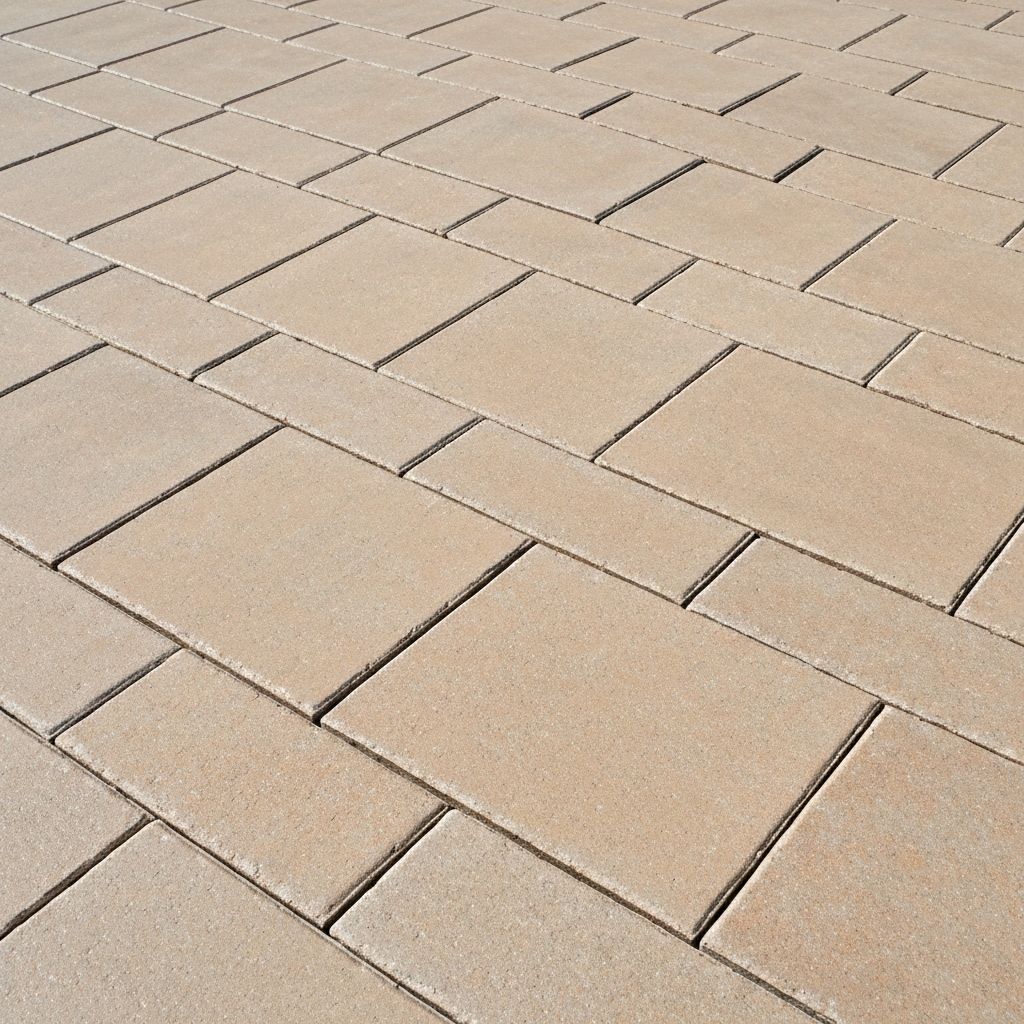
Satin Finish
Balanced Enhancement
Shine
Heat
Slip Risk
The satin finish is our most requested option — a subtle, low-sheen enhancement that deepens the paver color by 15–25% while maintaining a sophisticated, non-commercial appearance. Breathability remains high, making it fully safe for Florida's humid climate.
- Subtle color depth enhancement without an artificial, plastic-looking shine
- Remains fully breathable — no risk of moisture trapping or white hazing
- Excellent UV resistance for South Florida's intense solar exposure
- Non-slip additive easily incorporated for pool deck applications
Best for: Driveways, patios, walkways, outdoor living areas — universal application.
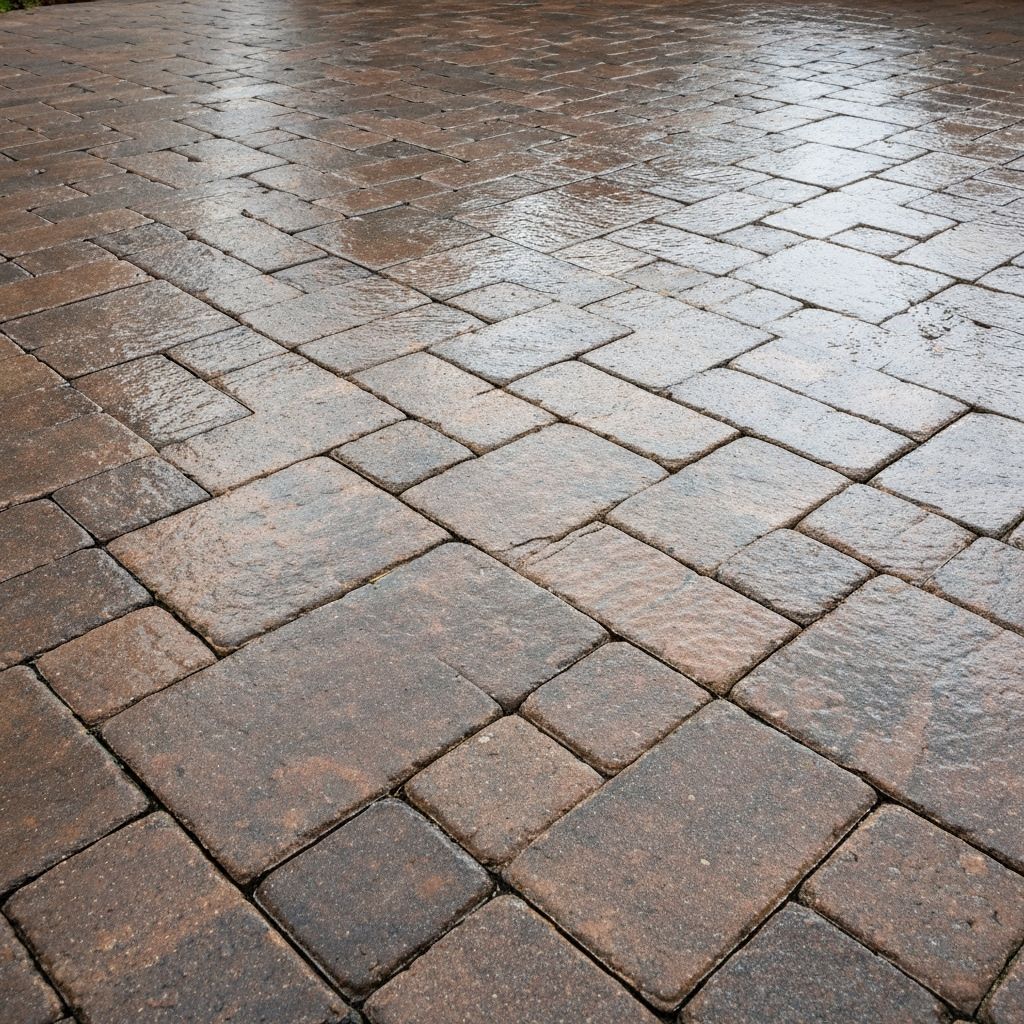
Wet-Look / High-Gloss Finish
Maximum Impact
Shine
Heat
Slip Risk
The wet-look finish delivers the deepest color saturation and a rich, reflective gloss that dramatically elevates curb appeal. This is the showroom finish — ideal for driveways and front-of-home applications where visual impact is the primary objective.
- Deep, rich color enhancement — pavers appear perpetually freshly rained-on
- Maximum UV color lock — prevents bleaching on exposed driveways
- Easiest to clean surface — contaminants sit on the gloss layer, not within pores
- Non-slip aluminum oxide additive is mandatory — always included in pool area applications
Best for: Driveways, decorative patios, colored concrete pavers, high-visibility areas.
Florida Note: Wet-look sealers offer the least breathability. On travertine or in very humid enclosed areas, we use water-based formulations with a breathability rating of 3+ to prevent moisture trapping.
Water-Based vs. Solvent-Based Sealers
The Florida Homeowner's Guide to choosing the right sealer chemistry for your climate.
The Modern Florida Choice
The Traditional Choice
Breathability (Moisture Escape)
High — allows trapped ground moisture and vapor to escape freely. Zero risk of white hazing (blushing) in Florida's humid climate.
Low — forms a film barrier that traps moisture. High risk of efflorescence and blushing on travertine and concrete in humid environments.
UV Resistance & Fading
Excellent — modern acrylic water-based formulations provide UV inhibitors rated for Florida's UV Index 11+ conditions.
Very Good — strong UV protection but may yellow slightly over time with direct Florida sun exposure on light-colored stone.
Color Enhancement Level
Good to Excellent — satin and wet-look water-based sealers enhance color 15–35%. Matte option preserves natural appearance.
Excellent — deeper, more intense wet-look enhancement with richer color saturation. Traditional choice for maximum gloss.
Eco-Friendliness & Odor (VOCs)
Low VOC — safe for application around pools, pets, and children. Minimal odor. Eco-friendly and compliant with Florida DEP standards.
High VOC — strong odor during application and cure. Requires adequate ventilation. Not recommended near occupied indoor spaces or pools.
Re-application Compatibility
Excellent — re-coats cleanly over previous water-based coats. Chemical stripping not required for routine maintenance re-seals.
Moderate — solvent-over-solvent re-application requires surface testing. Incompatible with water-based sealers without full chemical strip.
Performance in High Humidity
Superior — formulated to cure and perform in 60–90% RH environments typical of South Florida. Minimal cure time sensitivity.
Poor to Moderate — high humidity during application or cure causes blushing, peeling, and adhesion failure. Strict temperature/humidity windows required.
Expert Recommendation
For the vast majority of South Florida applications — pool decks, patios, driveways, and walkways — we specify water-based sealers exclusively.Florida's combination of high ambient humidity, saturated sandy soils, and seasonal heavy rainfall creates conditions where vapor-impermeable solvent-based sealers consistently fail, causing blushing and delamination within 12–24 months.
Solvent-based sealers remain appropriate for covered, low-humidity enclosed areas where maximum gloss is the design priority and moisture vapor is not a factor — for example, a covered garage floor or interior showroom. For all exterior Florida applications, water-based is the professional standard. It is what we use, what we warrant, and what we recommend without reservation.
Your Florida Paver Maintenance Timeline
Rinse with garden hose
Remove salt, pollen, and organic debris before they bond to the sealer surface. 5 minutes prevents 5-hour stain extractions.
Light pressure wash + inspect
Low-pressure rinse (1,200–1,500 PSI max) to remove bio-film buildup. Inspect joint sand levels and identify any sealer stress areas.
Free professional inspection
We assess sealer integrity, joint sand compaction, and early signs of UV degradation. We document the condition and advise on timing for the next reseal.
Professional restoration reseal
The 3-Year Rule: Florida's climate mandates professional resealing every 2–3 years for maintained surfaces. Pool decks closer to 18–24 months due to chlorine exposure.
Paver Sealing Throughout South Florida
Serving homeowners across Palm Beach, Broward, and Lee Counties. Click your city for a dedicated local service page.
Palm Beach County
Broward County
Florida Paver Sealing — Your Questions Answered
How often should I reseal my pavers in Florida?
In South Florida's climate, we recommend resealing every 2–3 years. Florida's UV Index 11+, 60+ inches of annual rainfall, and ambient humidity of 60–80% accelerate sealer breakdown significantly faster than in cooler states. Pool decks exposed to chlorine splash may require resealing closer to every 18–24 months. We offer a free annual inspection to assess sealer condition.
How long before I can walk or drive on sealed pavers?
With our water-based sealers, you can walk on the surface after 4–6 hours and resume light vehicle traffic after 24–48 hours, depending on ambient temperature and humidity. We schedule sealing projects in the morning to allow full cure time before the afternoon heat and to avoid afternoon rain events.
Does paver sealing make the surface slippery?
A wet-look sealer applied without additives will significantly increase surface slipperiness when wet. For all pool decks, outdoor showers, and wet zones, we incorporate a non-slip aluminum oxide aggregate directly into the sealer mix — maintaining a DCOF (Dynamic Coefficient of Friction) of 0.65+ that meets and exceeds ADA requirements. This is non-negotiable on our pool deck projects.
Can you seal brand-new pavers immediately after installation?
No — and this is one of the most common mistakes we correct. New pavers require a 30–90 day curing period to allow residual moisture, alkalinity, and efflorescence salts to migrate out of the material. Sealing prematurely traps these compounds within the paver matrix and causes permanent white hazing that cannot be corrected without full sealer stripping. We schedule your sealing appointment at the correct post-installation interval.
Can you reseal pavers that were already badly sealed by someone else?
Yes, but failed sealer must be completely removed first. We use professional-grade chemical sealer strippers to dissolve and mechanically extract the old product. After stripping, we assess the surface condition, address any staining or efflorescence, and apply a fresh system correctly. Do not apply new sealer over peeling or blushed sealer — the new product will fail within months.
Why does joint sand keep washing out after rain?
Standard kiln-dried joint sand contains zero binding agents — it is granular fill, not a bonding compound. Florida's heavy rainfall events routinely exceed 2 inches per hour, which is more than sufficient to hydraulically erode unbound sand from paver joints. The permanent solution is polymeric sand, which contains polymer binders that activate with water and cure into a solid, flexible matrix that resists rain washout, weed germination, and ant tunneling.
How do you fix 'blushing' or white spots caused by bad sealing?
Blushing or white hazing is caused by moisture being trapped beneath a non-breathable sealer. The correct fix is complete sealer stripping using a solvent-based stripper appropriate for the trapped sealer type, followed by surface drying (which may take several days in humid conditions), efflorescence treatment, and fresh application of a high-breathability sealer. There is no topical quick fix — the existing sealer must come off entirely.
Ready to Restore & Protect Your Pavers?
Choose how you'd like to start. Every engagement is zero-pressure and fully transparent.
Free Restoration Estimate
Our certified restoration specialist visits your property, assesses surface condition, identifies staining types, and provides a detailed written estimate with no obligation.
Book a Free On-Site VisitGet a Quick Quote by Photo
Short on time? Upload 3–5 photos of your pavers and we will provide a ballpark restoration estimate within one business day — no site visit required.
Upload Photos for a QuoteFree Maintenance Consultation
Have a 15-minute phone call with our senior restoration consultant. Get your specific questions answered and receive a personalized maintenance plan for your property.
Schedule a Consultation